
Open your humidor and see something white on a wrapper, or a tiny pinhole in a favorite cigar, and your heart sinks. Not every white speck is a disaster, and not every hole means your whole collection is lost. Knowing what you're looking at, and how to prevent problems, is one of the most useful skills a collector can have. This guide covers how to tell mold from plume, how to spot tobacco beetles and how to set up storage that avoids both.
Mold vs. Plume: How to Tell the Difference
What plume looks like
Plume (sometimes called bloom) is described by many collectors as fine, crystalline white or grayish specks that sit on the wrapper surface. It tends to be evenly scattered, has no fuzzy texture, and brushes away easily, often like dust.
What mold looks like
Mold usually looks fuzzy or raised, often blue-green, but it can also be white. It tends to grow in spots or patches, especially near the foot or the cap, and may smell musty. It can stain the wrapper and may come back after wiping.
When in doubt
Treat it as mold. Separate the affected cigars, inspect the rest, and find out why moisture built up.
What Causes Mold in a Humidor
• Humidity set or drifting too high for too long
• Poor air circulation, with cigars packed tightly with no airflow
• Over-wetted humidifiers or sponges
• Warm storage temperatures combined with high humidity
• An inaccurate hygrometer that reads lower than the true level
If You Find Mold
• Remove the affected cigars and set them apart.
• Inspect every cigar and the cedar surfaces.
• Correct the cause: lower the humidity, check the hygrometer's calibration, and improve airflow.
• Clean the interior carefully without household chemicals, which cedar absorbs. Persistent or widespread growth in the wood calls for a professional assessment.
Tobacco Beetles: What to Know
The signs
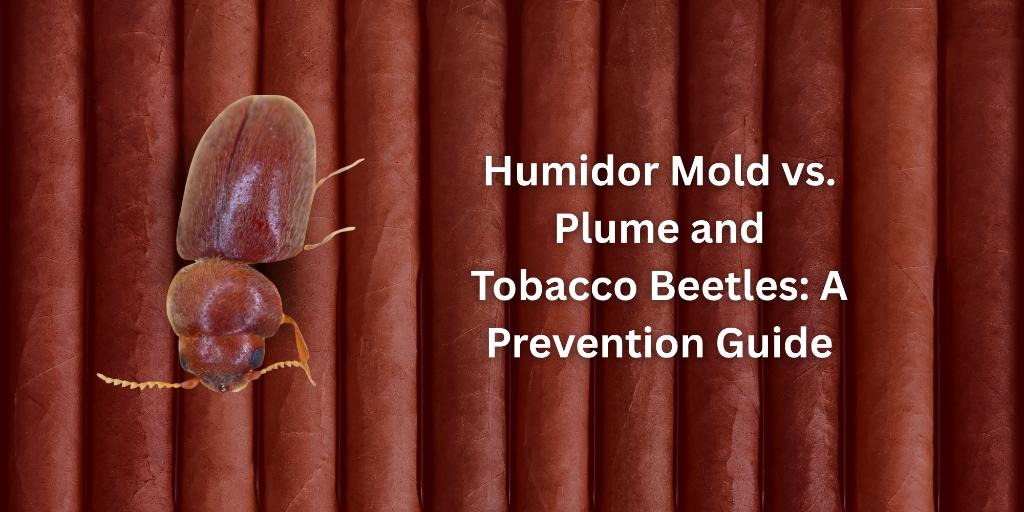
Tobacco beetles (Lasioderma serricorne) are tiny pests whose eggs can be present in tobacco. Signs include small, round pinholes in wrappers, tunnels through the cigar, and fine tobacco dust in the box.
Why temperature matters
Collectors widely point to warm storage temperatures as the trigger for beetle activity, which is why temperature control is a core part of cigar storage. Many collectors aim to keep their humidor in a cooler range, commonly the mid-60s °F, and avoid warm spikes.
If you find beetle damage
Remove and isolate the affected cigars right away and inspect the rest of the collection. Many collectors use a freezing protocol to deal with suspected infestations. Research a reliable method carefully, and clean the humidor thoroughly before restocking.
Prevention: The Best Defense Is Stability
Keep humidity in a sensible range
Many collectors keep humidity between about 62% and 70%, and avoid running above that for long periods.
Control temperature, not just humidity
A traditional wooden humidor can't cool itself. In a Boise summer, a room can warm up enough to concern collectors. Electronic humidors like Raching's MON, RR and Dark Matter series manage both temperature and humidity. On the Raching models listed on our site, the temperature range is 16–22 °C (about 61–72 °F) and the humidity range is 60–75%.
Let it breathe
Leave room between cigars and boxes, rotate stock, and avoid stuffing every inch.
Inspect new arrivals
Look over new cigars before they join the collection.
Calibrate your hygrometer
Accurate readings prevent both drying out and over-humidifying.
Frequently Asked Questions
Is plume a good sign?
Many collectors see plume as a natural result of aging, but it's harmless only if it really is plume. If anything looks fuzzy, raised or colored, treat it as mold.
Can I save cigars with mold?
Collectors' views differ. Mold on the foil or cellophane is different from mold on the wrapper or foot. If you're unsure, isolate them, and never let them sit with the rest of your collection.
Will a climate-controlled humidor prevent beetles?
Keeping storage temperature consistent and cooler is the most common preventive measure collectors use, and that's what climate control is for. Regular inspection still matters.
Do I need to replace a humidor that had mold?
Not always. Many can be cleaned and re-seasoned, depending on extent. Contact us for an assessment.
Protect Your Collection
If you've had a mold or beetle scare, or your current humidor can't hold steady conditions, Lucky Duck Humidors can help. That might mean a repair to restore seal integrity or a consultation on climate-controlled Raching options. Reach out through our contact page.